
GREEN BELT VS. GREY BELT: NAVIGATING THE NEW PLANNING FRONTIER
For decades, the “Green Belt” has been the most significant hurdle for developers and landowners. Designed to prevent urban sprawl and keep our towns and cities separate and distinct, it has often been viewed as an impenetrable wall to development.
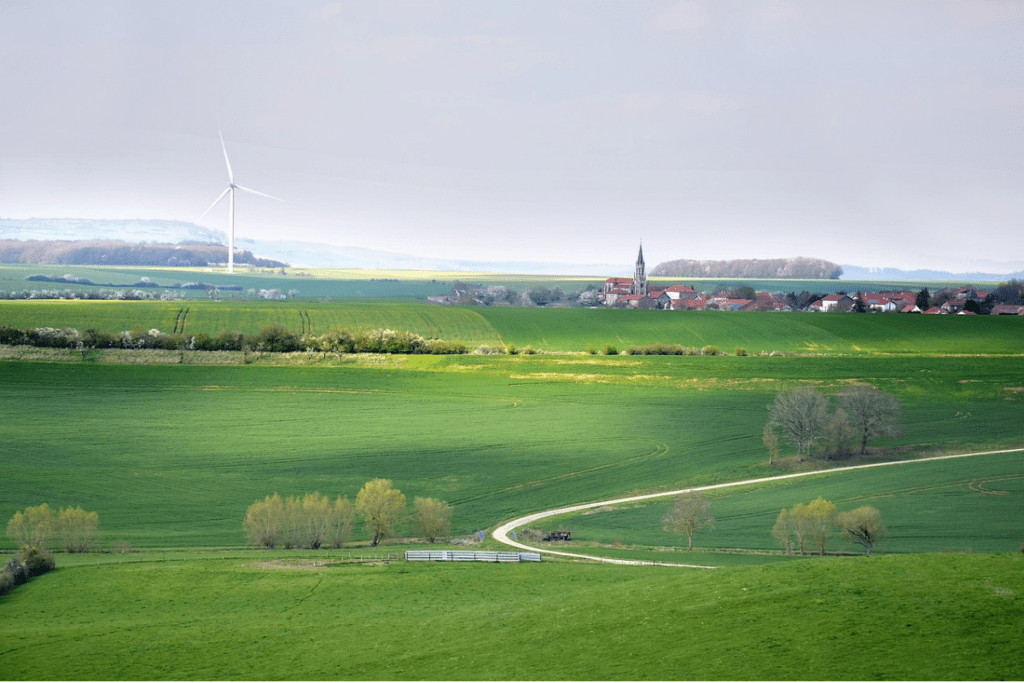
However, a new term has fundamentally shifted the physical landscape of planning: The Grey Belt. This concept has become the key to unlocking sustainable development in the short term, in areas that were previously off-limits. Here is what you need to know about this major policy shift and what it means for land potential.
What is the Green Belt?
The Green Belt is not necessarily a “green” or beautiful space in the ecological sense. Its purpose is purely functional and geographic. Under the National Planning Policy Framework (NPPF), it serves five core purposes:
1. To check the unrestricted sprawl of large built-up areas.
2. To prevent neighbouring towns from merging into one another.
3. To assist in safeguarding the countryside from encroachment.
4. To preserve the setting and special character of historic towns.
5. To assist in urban regeneration by encouraging the recycling of derelict land.
Enter the “Grey Belt”
The “Grey Belt” is a specific designation introduced to identify land that is formally within the Green Belt but does not perform a strong role against Green Belt purposes.
Definition: Land in the Green Belt that comprises Previously Developed Land (PDL) or other land that does not strongly contribute to the Green Belt’s primary purposes (specifically purposes 1, 2, and 4 above) or fundamentally undermine the purposes (taken together) of the remaining Green Belt.
Examples of Grey Belt sites include:
· Disused petrol stations or derelict industrial units on the edge of town.
· Old car parks or redundant storage yards.
· Greenfield sites, that are enclosed or partially enclosed by built development.
The “Golden Rules” for Grey Belt Development
Simply being “grey” isn’t an automatic green light for planning permission. National guidelines insist on a “Golden Rule” approach for major housing schemes on these sites:
· Affordable Housing: A minimum of 50% affordable housing (subject to viability) is typically required to justify the use of Grey Belt land (or fifteen percentage points above the existing affordable housing requirement, capped at 50%, prior to a new Local Plan being adopted).
· Infrastructure: Developers must demonstrate how they will improve local services, such as schools, healthcare facilities, and transport links.
· Green Space: Projects must provide new or improved public green spaces, ensuring the community gains useable, high-quality nature.
Why This Matters for Landowners
The Grey Belt policy allows for a more “surgical” approach to planning. Instead of a blanket “No” based on a map drawn decades ago, planning authorities are now mandated to look at the actual quality and contribution of the land.
If a site is “grey”—perhaps a previously developed site or a greenfield site serving only a limited Green Belt purpose—it now has a much higher chance of being allocated for housing or commercial use, provided it meets the necessary sustainability criteria. In addition, where local authorities are unable to demonstrate a five year supply of deliverable housing land, there maybe potential to submit a planning application in the short term.
Is Your Land “Grey”?
Identifying Grey Belt land requires a professional Strategic Land Assessment. We look at three critical factors:
1. Contribution: Does the site actually prevent two distinct settlements from merging?
2. Containment: Is the site already “enclosed” by existing buildings or permanent infrastructure?
3. Sustainability: Is it near existing transport hubs, or is it isolated in the open countryside?
Take the Next Step with Evolve Planning
The Grey Belt represents the most significant change to land policy in a generation. It has opened a window of opportunity for sustainable development that maintains the integrity of the countryside while addressing the need for homes and infrastructure.
Think your site might qualify? Contact Evolve Planning for a Strategic Land Appraisal. Our team of experts will help you navigate the NPPF’s “Golden Rules” and determine if your land is ready for the next stage of its evolution. Why not book a consultation today on 01889 504136.